MINDSET · 4 MIN READ
What a Soft World Produces
The world has never been more comfortable. By almost every material measure — access to food, to shelter, to medical care, to information, to entertainment, to connection — the average person in a developed society lives in conditions that would have been unrecognizable to most of human history.
This is genuinely good. The reduction of unnecessary suffering is not something to be argued against.
But something else has happened alongside the reduction of necessary difficulty. The removal of involuntary difficulty has also removed, for many people, almost all regular exposure to the kind of demands that build certain human capacities. Capacities that don't develop in comfortable conditions. That require resistance to grow.
That friction is gone. And its absence is producing something.
The Capacities That Require Resistance
Not all human development requires difficulty. Plenty of what makes a person who they are grows in conditions that have nothing to do with hardship.
But some capacities do require resistance. Specifically, the capacities that relate to tolerating discomfort, delaying gratification, persisting through difficulty toward long-term goals, and maintaining function under pressure. These are not developed in comfortable conditions.
Stress tolerance is built through repeated exposure to manageable stress, followed by recovery. Frustration tolerance is built through repeatedly staying with a problem that isn't yielding. The capacity for sustained effort — for not immediately reaching for relief when something is hard — is built through practice.
A world that removes those conditions doesn't just make life more comfortable. It removes the mechanism by which those capacities develop. And the people navigating a daily life engineered to minimize friction are encountering the hard moments that life still produces with capacities that were never built.
What Shows Up When It Gets Hard
The practical consequence is visible in how people respond when the comfort infrastructure fails them. When the hard thing arrives — the loss, the failure, the pressure — the person who has been living in engineered comfort meets it with resources that were never developed.
Not because they're weak. Because the conditions that would have built the relevant capacities weren't present. The experiences of voluntary difficulty that produce a reference library of hard things survived — the knowledge that you can handle more than the first wave of difficulty suggests — those weren't there.
The result is a specific kind of fragility — a lower threshold at which difficulty becomes overwhelming, a quicker move toward relief and away from engagement, a reduced capacity for the sustained, patient, uncomfortable work that most meaningful things require.
The Deliberate Counter
This is the context in which voluntary challenge — the choice to add difficulty back into a life from which it has been removed — becomes something more than a personal preference.
In a world that will not require hardship of you, the decision to seek it out is a deliberate act of self-construction. A recognition that certain capacities matter enough to build deliberately, since the conditions that would have built them incidentally no longer exist.
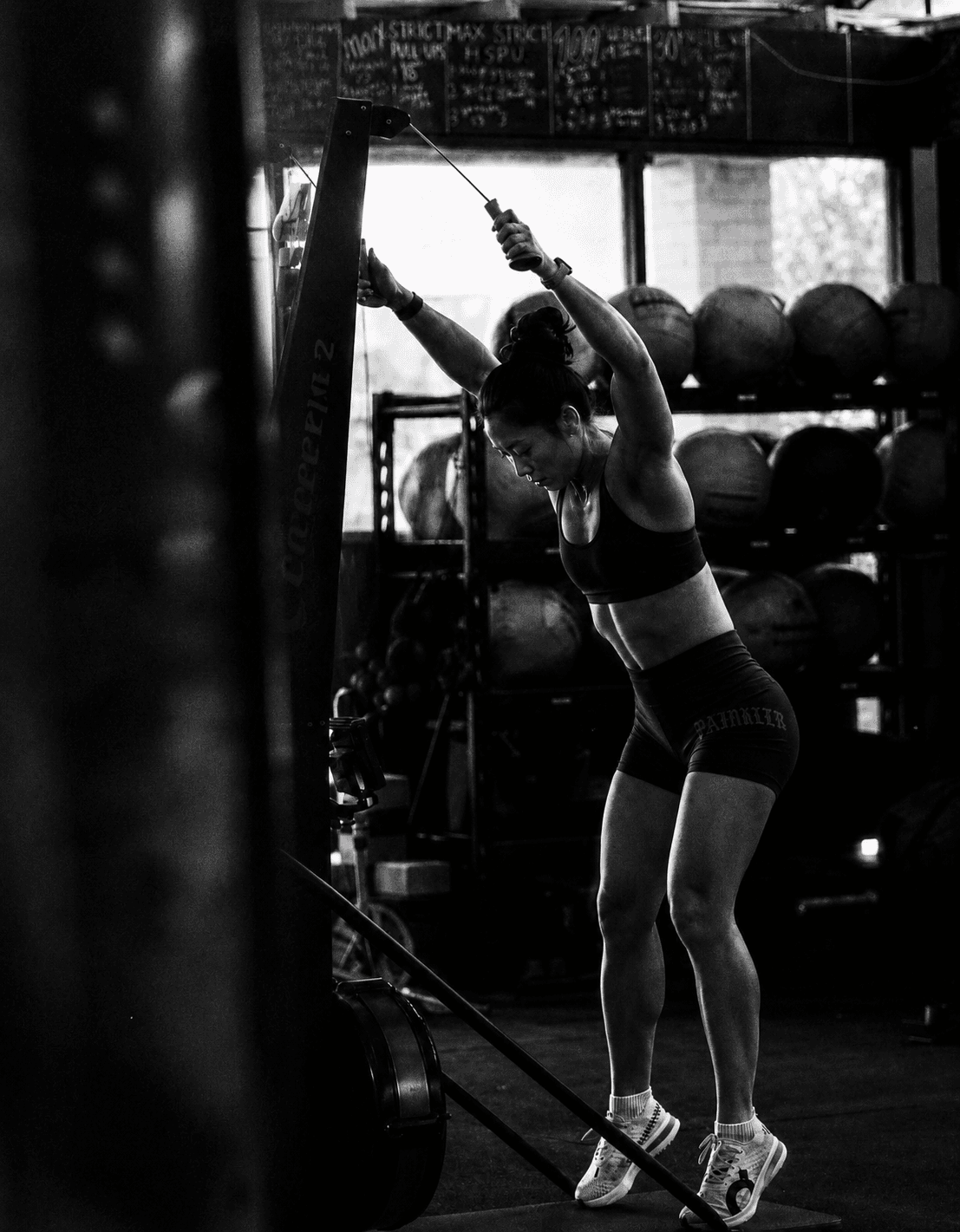
Training is the clearest expression of this available. The weight doesn't have to be moved. The distance doesn't have to be covered. Nothing external requires any of it. The choice to do it anyway is a decision about what kind of person you're going to be in a world that will not force you to answer that question.
The people making that choice are not suffering unnecessarily. They're building deliberately. And those capacities — stress tolerance, persistence, the functional relationship with discomfort — are becoming more valuable, not less, as the gap between what comfortable life builds and what hard moments require continues to widen.
What Gets Built in the Fire
The irony of a soft world is that it makes the hard things harder, not easier. The person who has lived entirely in comfort doesn't encounter fewer hard moments. Life is not soft all the way down. It produces loss and failure and pressure and uncertainty regardless of how well the infrastructure is designed.
What the comfortable world produces is a person who meets those moments less equipped to handle them. Who has fewer reference points for having been in hard things and come out the other side.
What the fire produces — the voluntary fire, the chosen difficulty, the training that nobody required — is the opposite. Not immunity to hard moments. A person who struggles differently. Who carries a quiet, earned confidence that has everything to do with a long history of choosing difficulty.
A soft world produces soft people. Not by design, not through malice — through the simple removal of the conditions that build otherwise.
The fire is still available. The choice to enter it is still yours.
Choose accordingly.